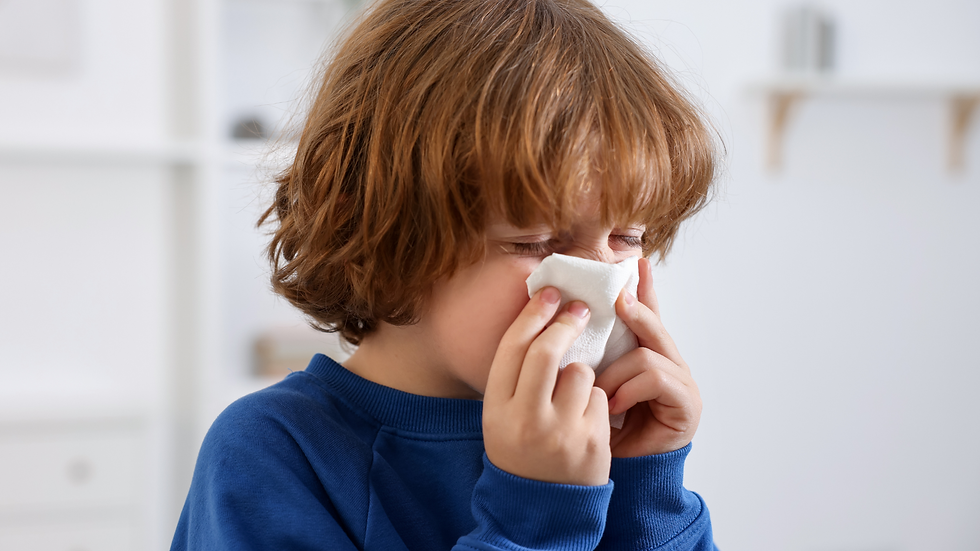
What is the Difference Between Cold, Flu, and COVID in Children?
- May 27
- 6 min read

Knowing how to tell the difference between cold, Flu, and COVID in children is essential for every parent. If your child has a runny nose, fever, and cough, the diagnosis will depend on how their illness began and how they are feeling. This is important because Flu vs COVID can have different windows for treatment, testing requirements, and care recommendations than a typical cold.
For families across Alaska, knowing how your child is feeling can help decide whether to monitor at home, test, call a pediatric provider, or schedule a same-day visit. Here is a clear, side-by-side guide from Alaska Children’s Urgent Care and Outreach to help you compare symptoms and choose the right next step.
Cold vs. Flu vs. COVID in Kids. A Quick Comparison Guide
The difference between cold, Flu, and COVID in children can be hard to spot at home because all three may cause cough, fever, sore throat, tiredness, and congestion.
Illness | Common Symptoms in Children | How It Starts | What Parents Should Know |
Cold | Runny nose, stuffy nose, sneezing, mild cough, mild sore throat, lower energy | Usually gradual | Colds often build over 1–2 days and improve with rest, fluids, and comfort care. |
Flu | Fever, chills, body aches, headache, dry cough, strong tiredness, sometimes vomiting or diarrhea | Often sudden | Flu can come on fast and feel much stronger than a cold. Antiviral treatment works best when started early. |
COVID | Fever, cough, sore throat, congestion, headache, tiredness, body aches, stomach symptoms, and sometimes loss of taste or smell | Can be gradual or sudden | COVID can look like a cold or the flu, so testing may be the clearest way to know. |
Overlap | Cough, fever, sore throat, runny nose, fatigue | Varies | Symptoms alone are not always enough to tell the difference. A pediatric provider can help with testing and next steps. |
How To Tell If My Child Has the Flu or COVID
How to tell if my child has the Flu or COVID can be challenging because both illnesses have similar symptoms that often overlap.
A Flu often starts suddenly. Your child may seem fine in the morning, then by the afternoon have a high fever, body aches, or a dry cough.
Common flu signs include:
Sudden onset — your child seems fine, then gets sick quickly
High fever — often 102–104°F and rising fast
Severe fatigue and body aches — “my child doesn’t want to move”
Dry cough — often more tiring than a mild cold cough
Vomiting or diarrhea — more common in children than adults
Headache — especially in school-age children and teens
Higher risk in young children — children under 5, especially under 2, need closer guidance
Your toddler might not tell you “I have pain,” but they might limp or refuse to walk, cling to you, cry more than usual, or suddenly quit playing. Ideally, flu antiviral drugs should be started within two days of when someone becomes sick. But antiviral medications can still help some kids beyond that window, depending on the risks and symptoms (Centers for Disease Control and Prevention, 2024).
How to Tell If My Child Has COVID
COVID can start more slowly or suddenly and may look like either a cold or the Flu in children. Symptoms may include fever, cough, sore throat, congestion, headache, tiredness, body aches, vomiting, diarrhea, or loss of taste or smell.
A known exposure at school, daycare, sports, or home can make COVID more likely, but symptoms alone are not always enough to know. Testing is often the most reliable way to tell the difference, especially when symptoms are strong, started recently, or followed a known exposure. Testing can help guide school, daycare, household, and care decisions.
How to Tell If My Child Has a Cold
A cold usually comes on gradually over 1–2 days and tends to stay milder than the Flu. Your child may have a runny or stuffy nose, sneezing, mild cough, mild sore throat, and either no fever or a low-grade fever, especially in younger children.
A runny nose may start clear and later turn yellow or green; that color change alone does not automatically mean a bacterial infection. Nasal mucus can turn yellow or green after a few days with a cold, and most colds improve within 7–10 days (HealthyChildren.org, 2025; Mayo Clinic, 2023).
The Difference in Flu Symptoms in Toddlers
Flu symptoms in toddlers can be harder to identify because toddlers often cannot explain what hurts. Instead, parents may notice sudden behavior changes.
What Parents May Notice | What It Can Mean |
Sudden high fever | Flu often starts quickly and may make a toddler look sick within hours. |
Refusing to walk or play | Body aches may show up as wanting to be carried or lying still. |
Extreme tiredness | A toddler may sleep more, seem quiet, or lose interest in toys. |
Dry cough | A flu cough may be more tiring than a mild cold cough. |
Vomiting or diarrhea | Stomach symptoms can happen with the Flu in children. |
Poor drinking | Refusing fluids can increase concern for dehydration. |
Clinginess or fussiness | Toddlers may act miserable because they cannot describe chills, headaches, or aches. |
When Does a Cold Become Something Worse in Kids?
A cold becomes something worse in kids when it worsens after day 5–7, brings a new or higher fever, causes ear pain, makes breathing look difficult, or leads to a child who stops drinking fluids. It is no longer acting like a simple cold.
Use this escalation checklist:
New fever after symptoms seemed to be improving
Ear pain or new fussiness in an infant
Symptoms lasting more than 10 days without improvement
Difficulty breathing or fast breathing
The child stops eating or drinking
Skin color changes, including pale or bluish color around the lips
Extreme fatigue or difficulty staying awake
Worsening symptoms are reasons to seek medical guidance for a cold.
Should I Test My Child for Flu and COVID at Home?
Testing at home can be useful if your child has a fever, cough, sore throat, body aches, or known exposure to COVID-19. At-home COVID tests are easy to find, and there are some tests available that can test for both COVID-19 and influenza.
Testing is important because antiviral treatment for flu is most effective when started early, and COVID-19 test results can impact school/daycare attendance, potential exposure to others in your home, and care decisions you make for your family. If your child has a negative test result but is still very sick, getting sicker, or not acting like themselves, do not rely on the test result. Call your pediatric provider.
Cold, Flu, and COVID in Alaska
What Parents in Anchorage and Beyond Should Know
For Alaska families, the respiratory illness season can look very different depending on where you live. The Alaska Department of Health tracks COVID-19, Flu, and RSV trends through its respiratory virus snapshot, which can help parents understand what is spreading locally (Alaska Department of Health, n.d.).
CDC guidance also recommends prevention steps for respiratory illnesses, including staying home when sick, improving airflow when possible, washing hands, covering coughs, and staying up to date on recommended vaccines (Centers for Disease Control and Prevention, 2025).
For instance, a parent located in Anchorage might have testing and pediatric care readily available. However, families located in Bethel, Kodiak, Fairbanks, Juneau, Ketchikan, or remote off-road villages may need to consider weather conditions, travel distance, clinic hours of operation, and whether the questions they have can be addressed via video visit.
This is where pediatric cold and flu telemedicine in Alaska can help. Through Alaska Children’s Urgent Care and Outreach’s telemedicine care, families across the state can connect with board-certified pediatric providers by secure video from 8 am to midnight, 7 days a week, which is especially helpful when travel to Anchorage is not simple or fast.
Medical Disclaimer
This article is for informational and educational purposes only and does not constitute medical advice. Always consult a qualified healthcare provider for concerns about your child’s health.
Frequently Asked Questions
How can I tell if my child has a cold, the flu, or COVID?
Symptoms can overlap, but colds usually come on slowly, Flu often starts suddenly with high fever and body aches, and COVID can look like either one. Testing may be the clearest way to know for sure.
When should I call a pediatric provider for cold, Flu, or COVID symptoms?
Call 907-22-5090 if your child has trouble drinking fluids, breathing that looks uncomfortable, symptoms that are getting worse instead of better, a fever that lasts longer than expected, or a chronic health condition.
Can telemedicine help if my child has cold, flu, or COVID symptoms?
Yes. A pediatric telemedicine visit can help review symptoms, timing, exposure, home test results, and whether your child may need testing, treatment guidance, or an in-person visit.